Mike Sinclair has been testing and writing about cars, motorcycles and more for over 30 years. He was a key executive team member when ACP Media and Carsales formed Australia’s leading automotive, industrial, marine and motorcycle online network in the 2000s, and the driving force behind the launch of motoring.com.au. For two decades, Mike led the large multimedia and editorial team at Carsales, and all PR and corporate communications. Mike now consults with a number of key brands on a range of automotive and powersports opportunities.
In a delicious twist of irony, your next electric vehicle might reach you via the most old-school transportation method imaginable – wind power. The newly launched Neoliner Origin, the world’s first commercial roll-on roll-off sailing cargo ship, is giving a whole new meaning to “clean shipping.”
This maritime marvel isn’t your grandfather’s sailing vessel – it’s a sophisticated hybrid featuring two towering 76-metre carbon masts that can fold like a high-tech origami project. With 3000 square meters of sail power and capacity for 265 containers (or 300-plus cars) it’s designed to haul serious cargo while slashing emissions.
For EV makers like Polestar, the wind-powered cargo ship could finally close the emissions gap in their supply chain.
Picture the marketing: “Your zero-emission vehicle, delivered by (nearly) zero-emission ship.”
It’s the kind of full-circle story that makes sustainability executives weak in the knees.
With its massive sails and the ability to slash fossil fuel use by 80%, the Neoliner Origin is essentially a giant sailboat playing cargo ship.
For EV brands shipping cars from China or Europe to Australia, it could be a chance to prove they’re not just greenwashing – they’re green-sailing.
Captain Cook might be rolling in his grave, but at least he’d be rolling emission-free.
Private Company Breaks Sound Barrier, Eyes Return of Fast-Flying Kangaroos
While most of us Down Under are used to marathon flights that feel longer than a Test cricket match, American startup Boom Supersonic has taken a significant hop towards making Sydney to LA shorter than a T20 game.
In a milestone achievement in late January, Boom’s XB-1 demonstrator aircraft has cracked the sound barrier, becoming the first privately developed aircraft to deliberately go supersonic. The sleek prototype hit Mach 1.1 (about 845 km/h) over California’s Mojave Desert, the same patch of sky where Chuck Yeager first broke the sound barrier in 1947.
“She was real happy supersonic,” reported test pilot Tristan ‘Geppetto’ Brandenburg after landing, in what might be the most laid-back description of breaking the sound barrier ever recorded.
While several commercial business jets have reportedly nudged past Mach 1 during testing or in unusual circumstances – including a Gulfstream G650 that allegedly broke the sound barrier during dive testing in 2009 and speculation around Cessna Citation X’s capabilities – these instances were either unintentional or part of safety envelope testing. Boom’s XB-1 on the other hand is purpose-built for as a test platform for sustained supersonic flight.
The breaking of the sound barrier marks a crucial step toward Boom’s ambitious goal of bringing back supersonic passenger travel, which has been grounded since Concorde hung up its wings in 2003.
Boom’s proposed Overture airliner promises to slash the dreaded trans-Pacific journey times, with the potential to zip up to 80 passengers from Sydney to Los Angeles in roughly half the current flight time.
Unlike its French-British predecessor Concorde, which was notorious for being about as fuel-efficient as a V8 ute, Boom claims its aircraft will use “up to 100% sustainable” aviation fuel. While this still produces emissions, it’s a step up from the gas-guzzling days of yore.
The company has already secured 130 pre-orders from major carriers including American Airlines, United Airlines, and Japan Airlines. It’s backing its ambitions with bricks and mortar too, having completed construction of its Overture Superfactory in North Carolina, where it plans to crank out 66 aircraft annually.
Boom’s founder and CEO, Blake Scholl, reckons the company has learned from Concorde’s mistakes.
“Concorde was a technological marvel for the 1960 but they weren’t focused on the economics, and it became too expensive to fly,” Scholl told the Guardian in an interview in August 2022.
The Concorde used redesigned military aircraft engines with the attendant running and maintenance cost issues. Boom is seeking to address running costs with measures including developing its own bespoke engines, ground tests of which are ambitiously targeted at late 2025.
The XB-1’s success doesn’t guarantee smooth sailing ahead—or smooth flying, for that matter. But with plans to reach speeds of Mach 1.7, roughly twice the speed of current commercial aircraft, and the ability to fly significantly faster than current airliners even when staying subsonic, Boom might just succeed in making those long-haul flights from Oz feel less like a biblical journey and more like a quick jump across the ditch.
Next time you’re settling in for that 15-hour Pacific crossing, just remember: help might be coming, mate.
Australians are hesitant about purchasing used electric vehicles (EVs) – and that needs to change.
While there’s growing interest in new EVs, the used market is struggling. Battery electric vehicles (BEVs) are lingering on dealer lots, prices are dropping, and their retained values are falling behind those of internal combustion engine (ICE) and hybrid vehicles.
This might seem like a golden opportunity for savvy buyers (both retail and wholesale), but for most used car dealers, it’s a major deterrent. And that’s a problem if we want to see more Aussies making the switch to electric.
Although there are multiple channels to purchase used BEVs, recent research from carsales shows that buyers still prefer to buy from dealerships. But they can’t buy what they can’t find.
At a recent Australian Automotive Dealer Association (AADA) event, I hosted a panel to discuss improving used EV sales, drawing on data from sources like carsales, Redbook, and Cox Automotive Australia. The data from late July aligns with the latest insights I’ve received from Cox Automotive, an industry powerhouse.
During the AADA panel, we focused on the biggest issue holding back the second-hand EV market: consumer confidence. And at the core of that concern? Batteries.
Consumer Concerns About EV Batteries
The comments we hear repeatedly from consumers are: “EV batteries don’t last,” “You’ll eventually need to replace the battery, and it’s going to be expensive,” or, ironically, “You can’t replace the battery at all, making the car worthless.”
This uncertainty isn’t just affecting buyers; it’s also discouraging dealers, who are wary of trading and reselling EVs because they’re unsure about the vehicles’ long-term value.
During the AADA panel, industry leaders like Scott Nargar from Hyundai Australia, Laurissa Mirabelli from Polestar, and fellow automotive commentator Toby Hagon helped debunk these myths. Let’s revisit the key points.
1. Do EV Batteries Really Need Full Replacement?
A common misconception is that even minor battery issues require replacing the entire pack. But how often is that actually necessary?
FACT: It’s not. Full battery replacements are much rarer than engine replacements in ICE vehicles.
FACT: Modular repairs are more likely. Rather than replacing the entire battery, manufacturers can repair or replace individual components or modules, which greatly reduces the cost and impact on a vehicle’s value.
2. Will Battery Degradation Kill Your Car?
Another concern is that EV batteries degrade quickly, causing performance to decline over time. However, the data shows this fear is largely misplaced.
FACT: Battery degradation is usually minimal. Most major EV brands report far less battery degradation than expected. For instance, studies from Polestar, Tesla, and Nissan show that batteries lose only a small percentage of their capacity even after many years. Projections suggest EV batteries will remain within usable limits well into a car’s third or fourth ownership phase.
3. Can You Accurately Check a Battery’s Condition?
This is the big one. Even if EV batteries last longer and degrade slower than people think, buyers still face a hurdle: they don’t know the condition of a used EV’s battery when they’re shopping. This lack of transparency is a huge barrier.
FACT: The industry is moving quickly to address this. International regulations are emerging that will require automakers to provide battery state-of-health (SoH) information via onboard diagnostics. While it may take some time for this to filter down to Australian cars, Cox Automotive Australia is leading the charge locally with a solution for assessing battery SoH. This could be a game-changer for the used EV market.
Addressing Valid Concerns
Mike Costello, Corporate Affairs Manager for Cox Automotive Australia, told me: “Transparent communication about a used EV’s battery state-of-health is key to establishing a stronger second-hand market. While research shows battery degradation is typically minor, customer concerns about long-term lithium-ion battery performance are valid and need addressing.”
Costello says Cox Automotive is close to launching a tool that will give accurate battery health readouts in minutes. This information can then be included in listings, just like an odometer reading or the vehicle’s build year.
He added: “Cox division Manheim Australia has already tested the SoH solution with an international provider, and the feedback from dealers and fleet managers has been overwhelmingly positive.”
Costello believes that with dedicated EV auctions now running and an expected increase in EV stock through wholesale channels by 2025, transparent battery health tests could be the missing link in boosting consumer confidence and sales.
At the very least, it could remove the biggest thorn in used EV shoppers’ sides.
What’s Next for Used EVs?
Australia’s used EV market is still in its infancy, but with the right strategies, it will grow. Battery transparency, debunking myths about longevity, and introducing industry-standard diagnostic tools are all critical steps to building trust.
For consumers, now might be the ideal time to consider going electric. Prices are falling, and battery technology is proving more reliable than many think, making this a prime moment for savvy buyers to secure a deal.
For dealers, recognizing that EVs are here to stay — and preparing now — will lead to significant future opportunity. Time to plug in…
The last man to bring a brand into Supercars gives Toyota’s decision the thumbs up.
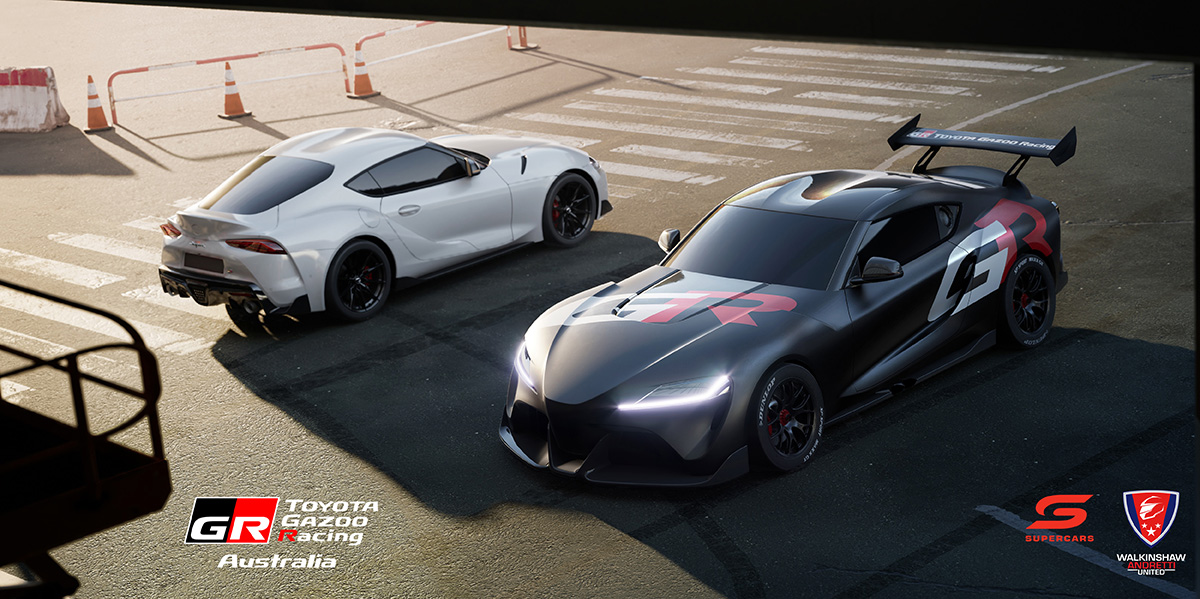
Toyota Australia’s announcement that it will enter Supercars is about as big as motorsport news gets.
It’s a huge boost for the series. Toyota’s marketing and activation muscle is unrivalled Down Under. While it will certainly be good for Toyota, it will inevitably be great for Supercars as well. This red tide will raise all boats.
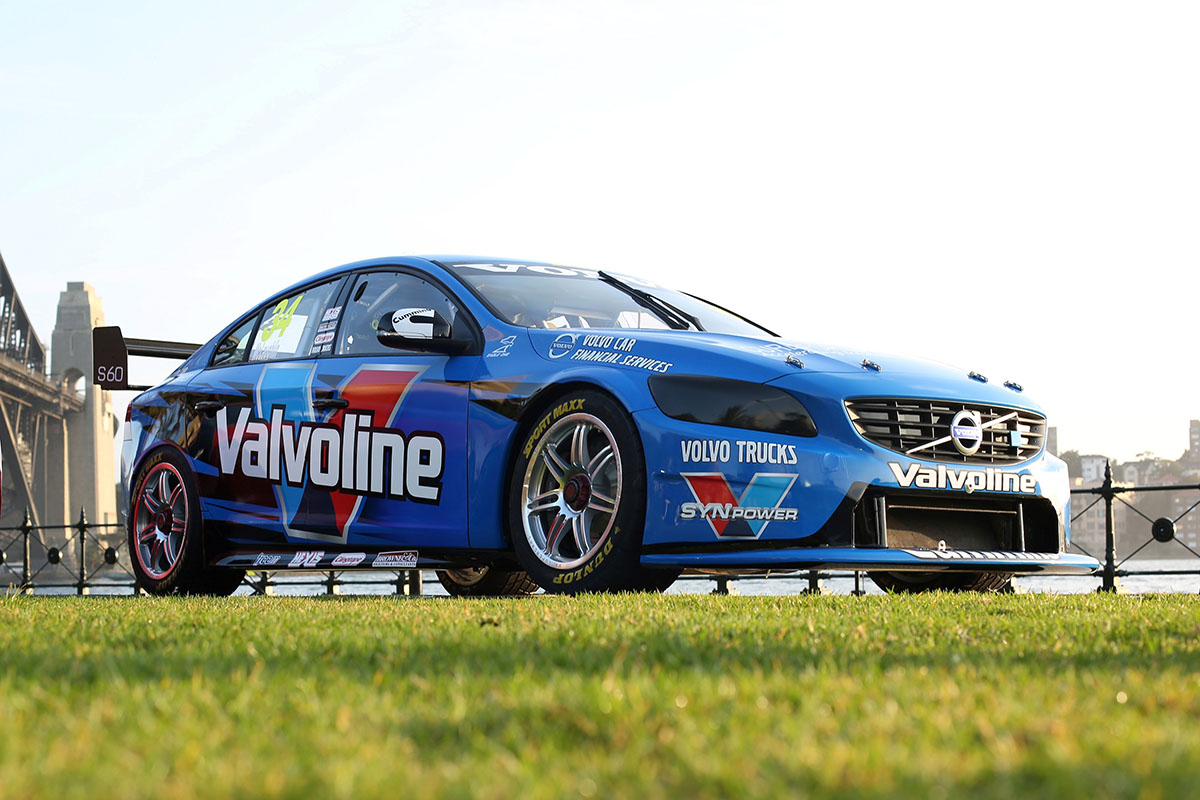
The last manufacturer to join Supercars was Volvo. Although its involvement was relatively short-lived, it was successful – both on and off the track. The architect of Volvo’s Supercars entry was Matt Braid, then CEO of Volvo Australia. Braid later went on to become the Managing Director of Supercars – a poacher turned gamekeeper of sorts.
He’s ideally placed to comment on the challenges and opportunities Toyota faces as it sprints toward the 2026 Supercars series, with Walkinshaw Andretti United as its homologation team.
I expected Braid to be the first call for many motorsport commentators. When he wasn’t, curiosity got the better of me. So, I picked up the phone.
“They’ve been the biggest target for a long time,” Braid said from his Sydney base.
“I saw Tony Cochrane say that the one thing he regrets is not being able to get Toyota. It was the same when I was at Supercars. James Warburton, John Casey, and I pushed pretty hard, but credit to the team now – they’ve scored the big one.”
Braid notes that Toyota’s vice president, Sean Hanley, is key to this decision. A lifelong Toyota and Lexus executive, Hanley has had Supercars in his sights for decades but played the long game. It’s only now that the stars have aligned. Make no mistake, however – without Hanley’s considerable influence within the company, the Supercars business case would likely never have progressed.
“It could only happen with Sean Hanley,” Braid agreed.
“He likes the sport, but it’s not just a love affair. He sees the benefit. He was behind the [Toyota 86 series], and the [Lexus] Safety Car… They dipped their toe in the water for a long time, getting everything right before putting the [successful] business case forward.”
“Getting the business case approved was probably the biggest hurdle… Now, keeping it relevant in their global sphere is key. It will be interesting to see how they manage that and maintain global support over the [pre-2026] period to achieve their goals…”
Braid knows all too well the complexity of modern automotive marketing. He masterminded Volvo’s Supercars entry and says the real work has just begun for Hanley and his Toyota team – both in the boardroom and the workshop.
“It’s scary that it’s been that long [since a new brand entered Supercars], but the Australian market is vitally important to Toyota. They’re in a different position than Volvo was at the time.
“Getting the business case approved was probably the biggest hurdle… Now, keeping it relevant in their global sphere is key. It will be interesting to see how they manage that and maintain global support over the [pre-2026] period to achieve their goals,” Braid said.
On the technical side, Braid praised Toyota’s decision to partner with the Walkinshaw Group. This partnership goes beyond the racetrack – they’re working together on the local left-to-right-hand drive conversion of Tundra full-size US-market pickups, a world-first for Toyota.
More Toyota USA products are expected to follow the Tundra’s late-2024 release.
Local expertise is essential, Braid asserts.
“We’ve seen it before where a big manufacturer wants to get involved. Often, they dive in and try to do it all themselves, and it doesn’t work.
“It’s critical to link with a local team that has deep knowledge of the series and solid engineering capabilities. We saw Mercedes-Benz attempt this through AMG – they thought, ‘We know engines and cars, we’ll do it our way,’ but it didn’t work out.
“But Ryan Walkinshaw and his team are the perfect partners. They understand the pressures and opportunities on the OEM side, and partnering with Toyota is a huge win for them,” Braid said.
Toyota joins Supercars as the clear number one auto brand in Australia. Braid says he’ll be watching closely to see how Toyota engages with the public over the next 12 months as it prepares for its on-track debut.
“They’ve already got a great platform to communicate this news and build on it. Getting the reach won’t be an issue – the interesting part will be the content they create to communicate [their participation].
“With Volvo, we didn’t quite have the same reach, which impacted the market [opportunity]. We had to work harder to get the news out and showcase the brand. Toyota already has a ready-made audience, so they can focus more on the content to rev it up.”
Braid also sees off-the-shelf assets that Toyota can leverage.
“They have the Gazoo Racing brand and blending that into Supercars will be fascinating to watch. They already have cars on the road that can support their efforts.
“Every manufacturer is looking for an edge – both for their brand and how they promote it. The racing side is one thing, but engaging with drivers’ personalities is another.
“‘Shoulder content’ has become critical in sports. Drive to Survive is the obvious example – there’s now huge demand for the peripheral stories around racing, and I think Toyota will be able to leverage that.”
Braid adds that the engagement of Toyota’s 270-strong dealer network around Australia will be another key element.
“It’s a galvanizing experience. At Volvo, we brought our dealer network along for the journey, explaining why we wanted to go racing. It was a big leap for us, but the dealers backed it 100 percent – even pushing for the Polestar blue road cars. They jumped on board quickly.”
He recalls how racing united typically competitive dealers:
“There’s nothing better than everyone coming together to back one team. After our first race event in Adelaide, every dealer was in the hotel restaurant, toasting each other, cracking champagne. One of the senior Volvo execs [from Sweden] said he’d never seen a group of dealers come together and celebrate like that.
“That’s the power of getting behind a sports team – especially a motorsport team. I think it’s a real benefit.”
Braid is confident in Toyota’s success and adamant that this is great news for Supercars.
“It couldn’t have come at a better time,” he said, referring to speculation about Toyota’s impact on television rights negotiations.
“Any addition like Toyota has to help. This move will keep the other Supercars manufacturers on their toes and might also prompt other brands to take another look.
“I can’t give enough credit to those involved. It’s a big win, and as someone who tried to get Toyota involved, it’s a huge coup.”
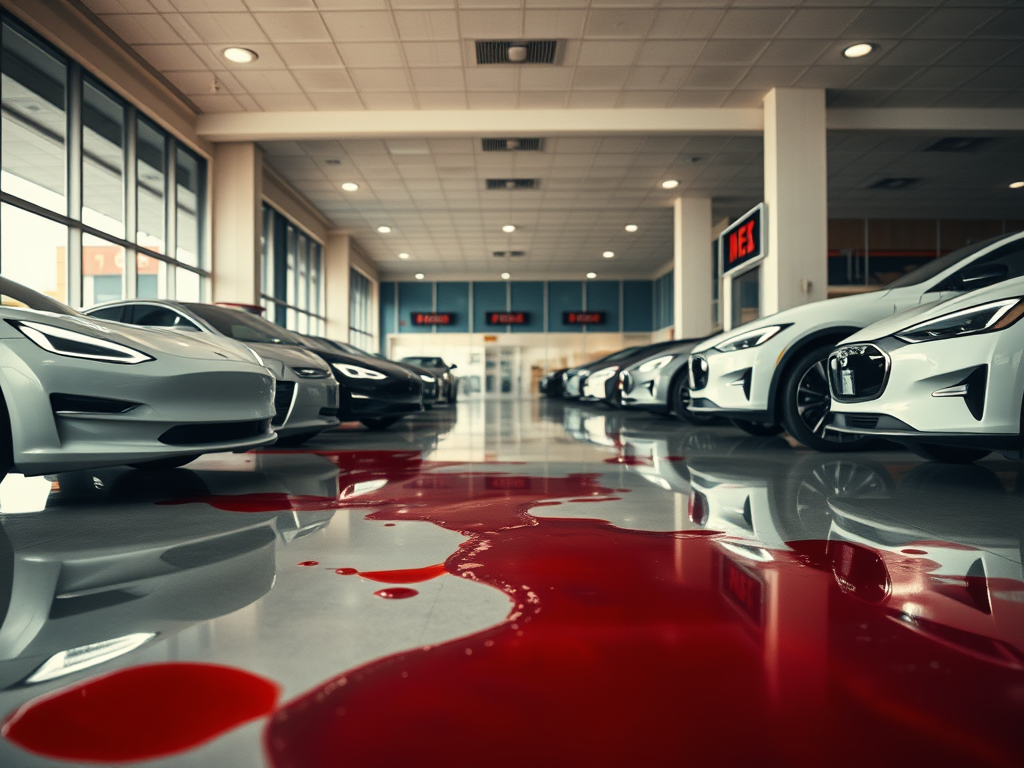
The influx of new brands into the Australian auto market presents opportunities—and the potential for blood on the floor.
The Australian new car market is heading for a reckoning. Even before factoring in macroeconomic conditions, the entry of new brands is set to trigger significant disruption.
Depending on how you count them, nearly 50 car brands are already competing in the Australian market. Over the next 12-18 months, as many as a dozen more could join them.
Some of these new entrants will target the budget-conscious, while others aim higher upmarket. Many—but not all—will be EV-only. Some will stick to traditional dealer-based models, while others will pursue direct sales or omni-channel approaches.
All of them will compete for experienced automotive talent.
More importantly, they will vie for the attention of a consumer whose focus is increasingly fragmented. These buyers are grappling with long-term higher interest rates, rising cost of living pressures, and an auto industry rife with competing claims—brands which in some cases use misinformation as a marketing tool.
In one of the world’s most competitive car markets, this is a recipe for—understatement alert—significant disruption. Add in the Australian auto ecosystem’s less-than-convincing commitment to electrification, and things become even more complex.
It goes without saying that new brands will need to excel to break through. To displace established players and overcome default purchase choices, they’ll need to innovate, meet buyers where they are, and ensure that interacting with their unproven brands is, as the consultants say, “frictionless.” Most crucially, some will need to craft a compelling narrative about why Australians should go electric.
Frankly, I’ll be surprised if more than a quarter of these new brands can navigate the complex landscape ahead.
Most will land in Australia with a pipeline full of product and a mandate to get vehicles onto driveways as quickly as possible. While there will be talk of building brands and growing the market sustainably, this is likely to last only until the second boatload (okay, maybe the third) arrives.
While that may benefit consumers in the short term, the medium- and long-term damage could be significant. It’s quite possible that some of these new brands will come and go quickly, leaving behind the expected collateral damage to staff, stakeholders, and consumers.
Struggling legacy brands are likely to collapse. Low-volume OEM operations may exit the market—some to be replaced by third-party distributors, others for good.
What’s the solution to all this? Short version: there isn’t one. Viewed as “Treasure Island” by global automakers, Australia remains an attractive market. It’s not even a case of “build it and they will come”—they will simply come.
The optimist in me sees the potential for exciting new vehicles, fresh approaches to sales, and redefined levels of after-sales service. There are also opportunities for automotive talent to thrive and for strong retail operators to scale.
But as the saying goes, be careful what you wish for. The battle lines are being drawn, and the field can only stretch so far. “May you live in interesting times” has rarely felt more apt.
Volvo’s decision to retain ICE in its portfolio is a clear indication EV uptake is too slow to pay the bills
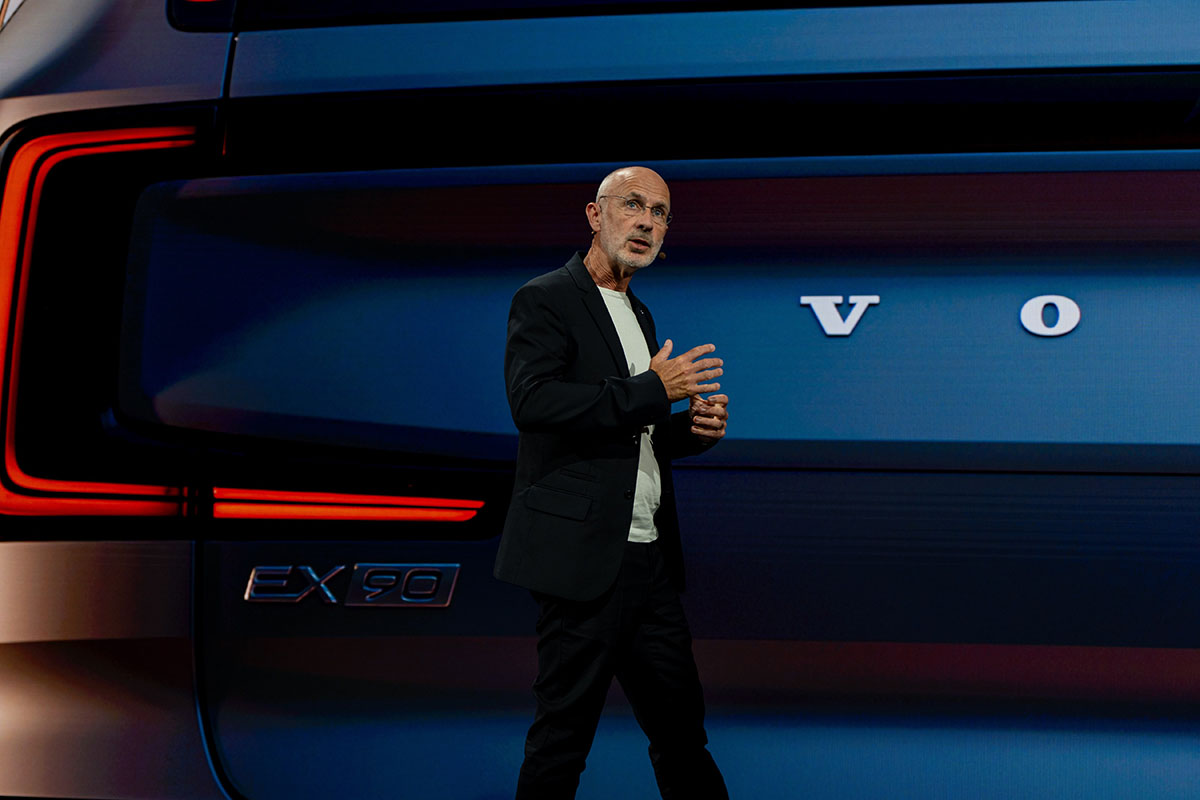
Volvo’s delay of going all-electric prompted me to dig up a transcript of an interview I did with Volvo boss Jim Rowan during a visit to Australia in early 2023…
Rowan made it very clear Volvo Cars couldn’t afford to invest in development of both ICE and EV. He championed the technological superiority of electric powertrains. But also conceded that EVs would be accepted at different rates around the world.
Rowan’s comments then make instructive reading now as the first world [re]considers personal transport options…
“I look at it [internal combustion] as an engineer. If I look at an internal combustion engine, it runs at an efficiency of about 35% because you lose so much to noise and heat and vibration. Our new e-motors are running at 93% efficient… There’s less vibration, there’s less noise, there’s higher efficiency, there’s zero tailpipe emissions. It feels that technology is going to be the next relevant technology for mobility,” Rowan commented
“And the same way as we moved from steam to internal combustion 100 years ago –because steam was good for its day but it had limitations and then of course internal combustion came … The same thing, I think, is going to happen over the next generation but it will be electric.
“[But] We need to understand the nuances at each market. If you look at the US as an example: the US is changing to electrification quickly on the coasts. In the interior [Midwest], then that’s slower, and the big push there is then PHEVs.
The same way as we moved from steam to internal combustion 100 years ago… I think, is going to happen over the next generation but it will be electric
“What’s interesting is the people who buy a PHEV and they need a second car, almost all of them go straight to BEV. They like the electric drive experience, and they’ve already got the kind of a safety net with the PHEV and then they go full electric on a second car or a third car — car for the kid, or whatever.
“So, I think it will be different in different parts of the world. We’ve said we’ll be fully electric by 2030. I think we will be. I think the market will move. That’s a decision that we take as part of our strategy. And I think we’ll be proven right. But it’s not going to be detrimental to the company as a whole because enough of the market will move to electric that we can take up that market share,” Rowan stated.
So, what’s changed? Is Volvo’s latest decision a concession that not enough of the global car market is going to shift? Interesting times…
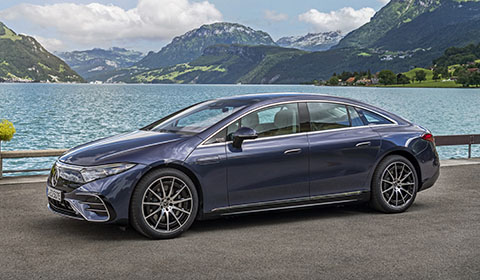
S-Class is almost a brand within itself. It’s a statement and a default purchase for many of the more well-heeled members of the community.
It’s also long been a technology bellwether for the Three-pointed Star. That it didn’t deliver a battery-electric opportunity for its customer set, nor top Mercedes-Benz’s technology offer, flew in the face of what S stands for.
Parlous sales and even worse retained values of the EQS globally made it clear – this was not the electric limo they were looking for…
The collateral damage did overall brand few favours…
Don’t get me wrong, battery electric cars have an important role to play and do, can or will suit a significant number of consumers.
But the S-Class decision reinforces that for many car buyers the future will be about the ability to choose your powertrain — without the need to throw away iconic qualities, performance, style, feel, fit and finish…
It may not be the engineering purist’s choice but plug-ins make sense IRL…
Like many of my colleagues I labelled plug-in hybrids as flawed tech initially. More recently, personal experience has changed my mind.
Living across inner city and a country destination with disparate wants of EV motoring in town and the ability to tow a boat (or a racecar) on weekends delivered an opportunity to reconsider. And so far, the experience has been unerringly positive.
OEM claims aside, the PHEV we purchased can only deliver around 30km of real-world EV range but with daily commutes lucky to be half of that and a charger at home, we’re perfectly placed.
Ours is a full-size SUV with a towing rating north of 3000kg. In town EV performance is quiet and quick. With a load on, its towing ability is better than solid. Unshackled it’s fast enough to have me keeping a weather eye on the boys in blue.
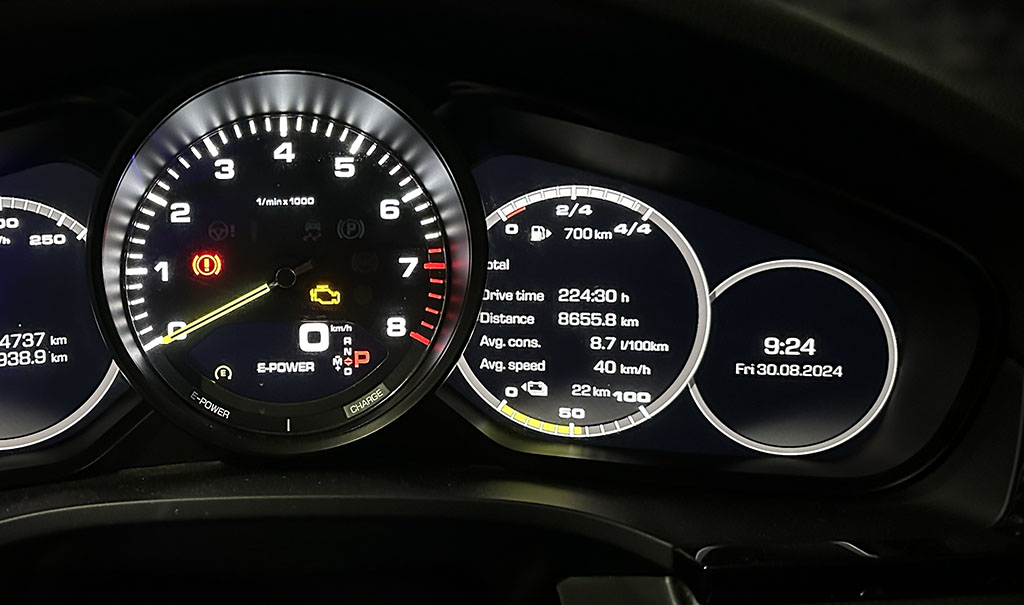
What’s been surprising, however, is the overall experience – and not just in terms of frugal fuel use. After nearly 9000km of varied use we’re averaging well under 9.0L/100km (better than its diesel counterpart) but the standout is the ‘normal’ hybrid operation which is smooth, seamless and refined.
In town EV performance is quiet and quick. With a load on its towing ability is better than solid…
Purists will call out the ‘two powertrains’ lament, but with the next generation of PHEVs set to offer EV ranges closer to 100km, this is a technology that more Australians can and should consider for their next car.
Let’s hope commonsense prevails and the various factions in Canberra understand the opportunity plug-ins can deliver Aussie car buyers and ensure incentives remain for their uptake.
As many of my friends and colleagues across the auto and media landscapes already know, I’ll shortly leave my seat at carsales.
Corporate entities make decisions on their own timetables. Sometimes the changes suit the individuals involved. Other times they do not. Were it ever so…
The change for me comes after over 30 years of evolution. Such are the vagaries of the auto and powersports media landscape that there’s direct continuity back to the Spring day I started at Australian Motor Cycle News in 1993. In the interim, I’ve worn a carsales logo for almost the last 20 of those years…
I’m immensely proud of the body of work I’ve helped create. But also the culture we built and the commitment to the importance and value of independent, consumer-focused content.
There were always commercial realities to address, but I’ve been lucky to have senior executives that have supported the concept of independent journalism. And placing consumers at the centre of the content you create…
Sure, it’s easy to see carsales as a commercial-first platform. The irony of that is the carsales business model is still the best able to support content that is properly independent. Revenue from multiple sources will always trump sole dependence on sponsored content or even ‘sharp’ (and frankly at times questionable) pay per click or pay for visibility models.
It’s appropriate I acknowledge key people. Although difficult, I will keep the list very short.
The order in which I do so is not a measure of their importance… I’ve always had a bit of a scatter gun approach to my writing, why should that change now…
First up, the late, great Ken Wootton. ‘Wooser’ has been gone more than a decade, but I owe him for my start. Ken got ‘tough love’ half right. He trained as a teacher and continued to teach when his career moved from the classroom to journalism. The work ethic and commitment to quality content which I and others still hold dear was instilled in us by Ken.
The true value of independent editorial is hard to overestimate but is easily misunderstood. I was fortunate that carsales founder Greg Roebuck saw the opportunity it presented a business that had no content pedigree. Along with then Board Chair, Wal Pisciotta, Greg delivered the resource we needed to do things right… I hope Greg and more recently Cameron McIntyre still think fondly of the annual budget tussles.
The strong support from the auto brands I’ve enjoyed and the results the carsales content team delivered are the result of a team effort. The team’s longevity belied the industry average and that’s in a large part thanks to the two professionals who worked tirelessly to lead the team alongside me.
Marton Pettendy has forgotten more than most modern car writers will ever know. A proper wordsmith, he has the ability to call car brands to account and yet maintain an amiable working relationship 24/7… Skeptical, not cynical – as a good journo should always be…
On the production side of our business Ian Strachan is and remains the consummate content production exec – flexible, thorough, forward looking and dedicated. Without Ian’s influence our content would have been bytes not highlights.
I can’t thank you two enough.
To the rest of the carsales Content team, those who have moved on and those left behind, my sincere thanks also. All of you should be immensely proud of the body of work you’ve created and the work you’ll continue to do – whether within the organisation or in new pastures.
There’s a great future ahead for you all.
Finally, on the other side of the auto and powersports fence, I’ve worked with myriad stakeholders – execs, PRs, practitioners, hands-on engineering types and more.
I number many of you as friends. And I continue to learn from you every day.
We all have a job to do – kudos to those who remembered that my job and that of my team was not to be your brands’ cheerleaders. There are no media success stories, nor bestselling brands nor models without informed, engaged consumers. Most of us managed to remember that most of the time.
I could go on, but that’s far too much self-indulgence for now…
The at-times scandalous history behind some of the world’s most famous auto symbols
A picture may paint a thousand words, but the iconographs that identify car brands go even further. At the blink of an eye they associate lumps of alloy, steel, leather and rubber with not only a brand’s life-story but also a whole swag of ideals, values and lifestyle associations.
The stories behind these brand icons have taken on a life of their own. So much so, that some have become urban myths – why let the facts get in the way of a good story.
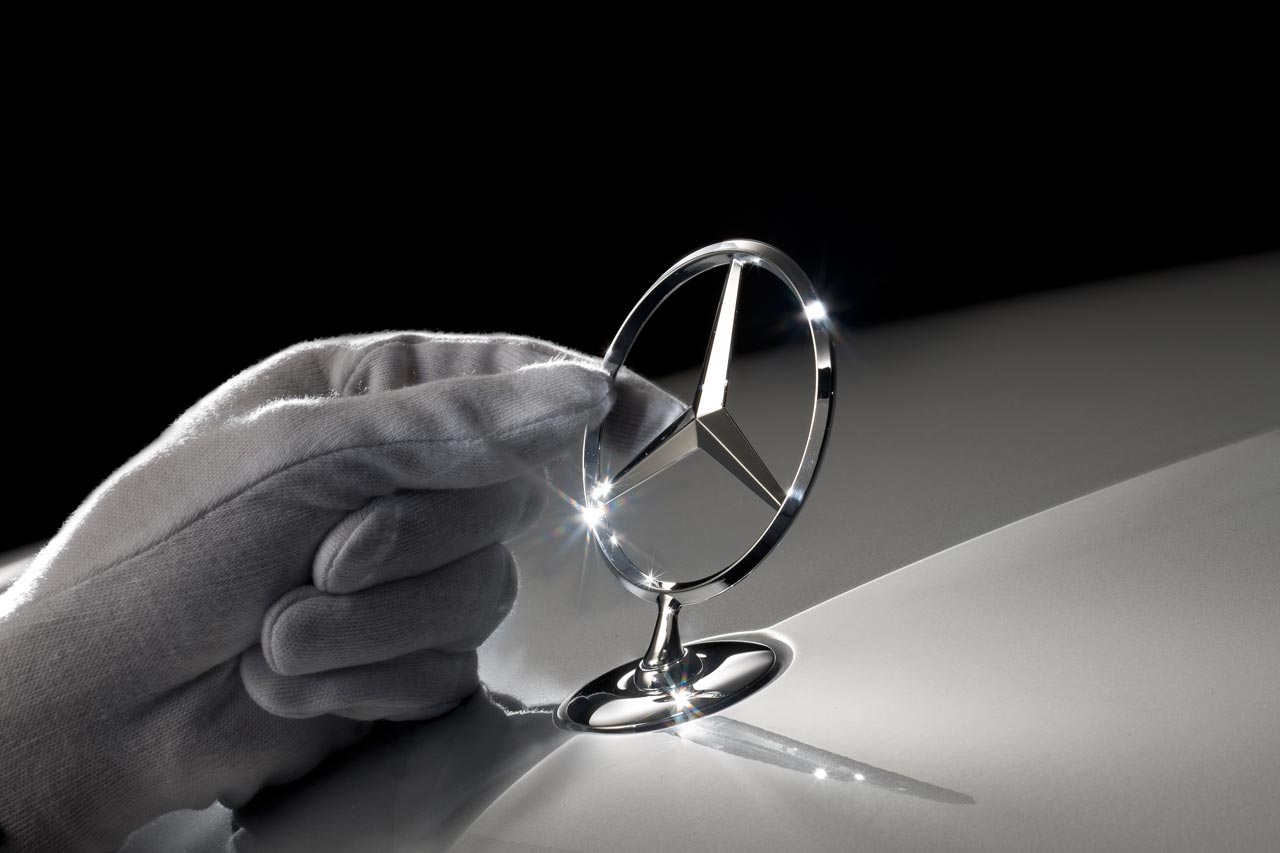
Arguably the most identifiable of all automotive brand symbols is Mercedes-Benz’s three-pointed star. Supposedly the three-pointer was meant to symbolise the founder Gottlieb Daimler’s ambition of “universal motorisation” in the air, on the water and, of course, on the roads of Europe. The truth of the choice of the tristar potentially has much more prosaic origins.
The company’s official history states, when searching for a trademark for the already successful company, Paul and Adolf Daimler (Gottlieb’s sons) remembered that their late father had once used a star as a symbol. As far back as 1872 Gottlieb had “marked a star above his own house on a picture postcard of Cologne and Deutz, and had written to his wife that this star would one day shine over his own factory to symbolize prosperity”.
The tristar was registered (along with a four-pointed design) in 1909, then in 1916 a band joining the tips was added, in which four small stars and the word Mercedes were integrated. The finished object, still very recognisable as the symbol today became a registered trademark in 1923.
Archrival BMW also registered a circular icon in the open decades of last century (1917) – very recognisably linked with the blue and white ‘Roundel’ that is still used today.
Many would have that the logo is a representation of a spinning aeroplane propeller but this is one of those urban myths. In fact, the truth is as simple as BMW’s name Bayerische Motoren Werke [Bavarian Motor Works].
The blue and white are drawn directly from German state Bavaria’s flag. They are reversed in position as it was then illegal within Germany to use national symbols in a commercial trademark.
Real BMW aficionados suggest the idea that the badge symbolised a spinning prop comes from a 1929 advertisement which featured a biplane with the image of the roundel in its propeller. That timing corresponds with the company gaining the rights to build Pratt & Whitney aero engines under licence.
Rolls Royce has a very recognisable double-R badge but the story behind that is nowhere near as interesting as that behind the brand’s other enduring symbol, The Spirit of Ecstasy.
Spirit is also known as The Whisperer, a nod to the fact the statuette was the celebration of a secret but ultimately tragic love affair between a British aristocrat and his secretary. The story has even been turned into a film.
The who were Lord Montagu of Beaulieu and Eleanor Thornton. The when was the turn of the 20th century when accounts say Montagu fell in love with ‘Thorn’ when she started work for him on his magazine, The Car Illustrated.
The symbol that tops the radiator on (almost) every Rolls Royce depicts Eleanor “in fluttering robes, pressing a finger to her lips to symbolise the secret of their love”, official histories state.
Montagu’s wife knew of and condoned the affair and even became friends with Thornton (who would also have Montagu’s child) but the whole arrangement was kept secret from all but a very small circle of friends.
The tragic end came during WWI when the ship Montagu and Eleanor were travelling on was torpedoed in the Mediterranean. Though he survived, the love of his life went down with the ship.
We think of ‘manufactured’ brands as a modern invention but the Swedes did it with their national treasure many, many decades ago. No, not ABBA, Volvo!
When the Volvo brand was created by founders at the conglomerate SKF, it was in part a bastardisation of the verb ‘roll’ in Latin but what sealed the deal was that the world Volvo was easy to pronounce in most languages and minimised the potential of spelling mistakes.
When it came to a symbol the marketeers wanted something strong, masculine and Swedish. Their choice was the ancient chemical symbol for iron — a circle with an arrow pointing diagonally upwards to the right.
Sweden was one of the pioneers in complex metallurgy… One box ticked. And the icon also symbolised the planet/god Mars in Roman mythology – hence the masculine overtones. Ticked again… Ironic, now, that Volvo is one of the auto brands that boasts the highest percentage of female purchasers worldwide.
Closer to home Holden’s lion badge has a long history that reportedly dates back to 1926 when the company (then a body builder) commissioned a new logo based on the ‘Wembley Lion’.
Egyptology was all the rage then and the lion was the symbol of London’s 1924-25 British Empire Exhibition. Added to it was reference to the fable that ancient man came upon the idea of the wheel after observing a lion rolling a stone. Both the lion and the stone can be seen –even in the most modern iteration of the Holden badge – one that will see out the local production of cars wearing it.
Two of the most iconic automotive badges are, legend suggests, inextricably linked – those of Ferrari and Lamborghini.
The Ferrari ‘Cavallino Rampante’ badge is linked to the symbology used by an Italian WWI airforce ace, Count Francesco Baracca. Accounts say a young Enzo Ferrari met the flyer’s parents who ‘bequeathed’ the symbol to the young racer as a good luck totem. It should be noted that Baracca’s good luck ran out before this point – he’d been shot down and killed.
Still, Ferrari made the symbol his own by keeping the black stallion but adding the yellow of his Modena hometown to the background.
Nearly half a century later one of Ferrari’s best customers, Ferruccio Lamborghini, fell out with the notoriously cantankerous Enzo to such a degree he decided to start making cars in competition.
Another urban myth suggests that Lamborghini’s first move was to poke serious fun at the iconic Modena brand’s logo. His choice – a rampant yellow bull on a black background…


 petrolhedonist